Collection
Every purchase keeps its own story.
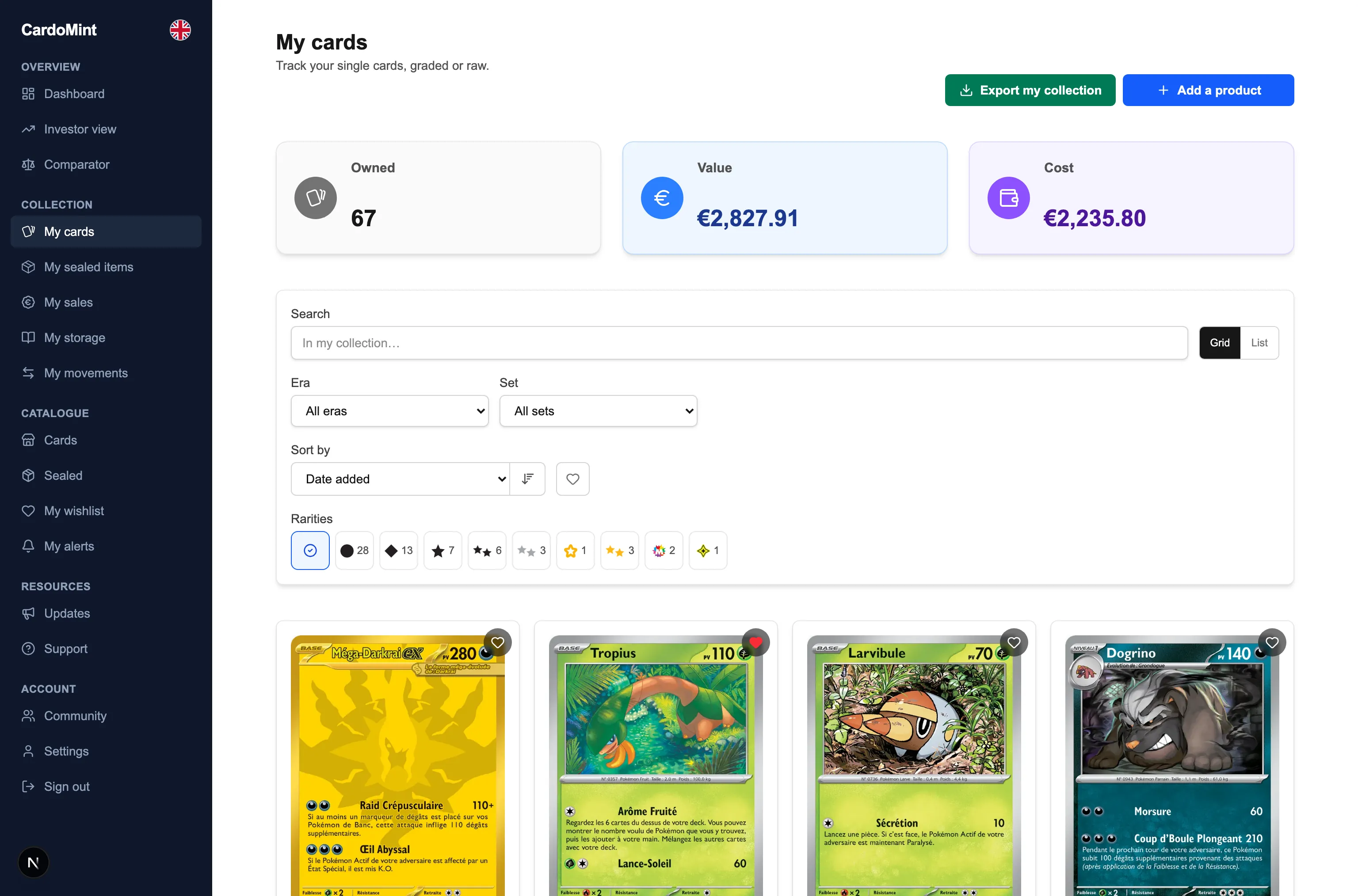
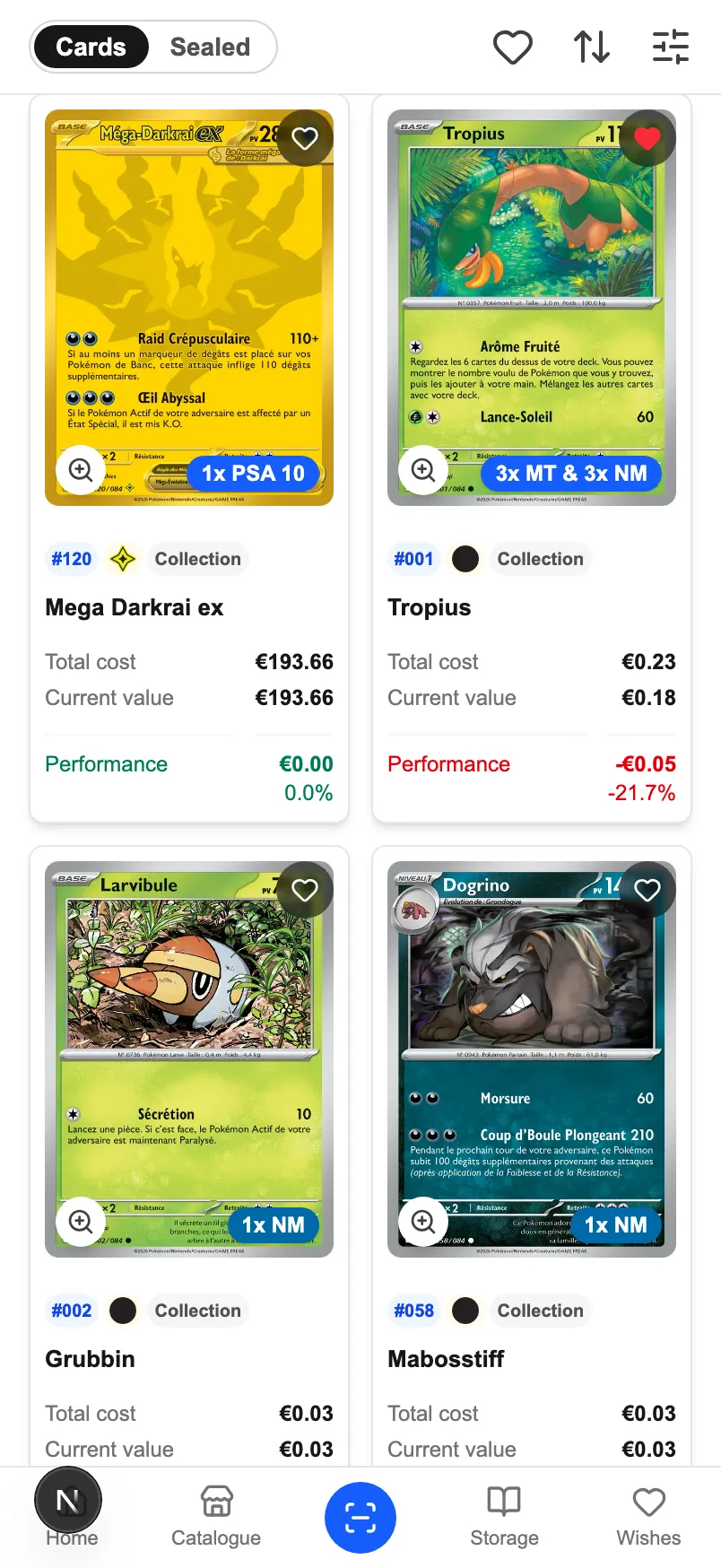
A date, a price, a place, a condition and a quantity. CardoMint keeps each batch's own, and infers none of them.
- 14 languages, 4 printings, 9 conditions, 6 grading companies and 113 grades.
- Ticking a box says « I have it » ; recording a purchase says « here is what it cost me ». Never one for the other.
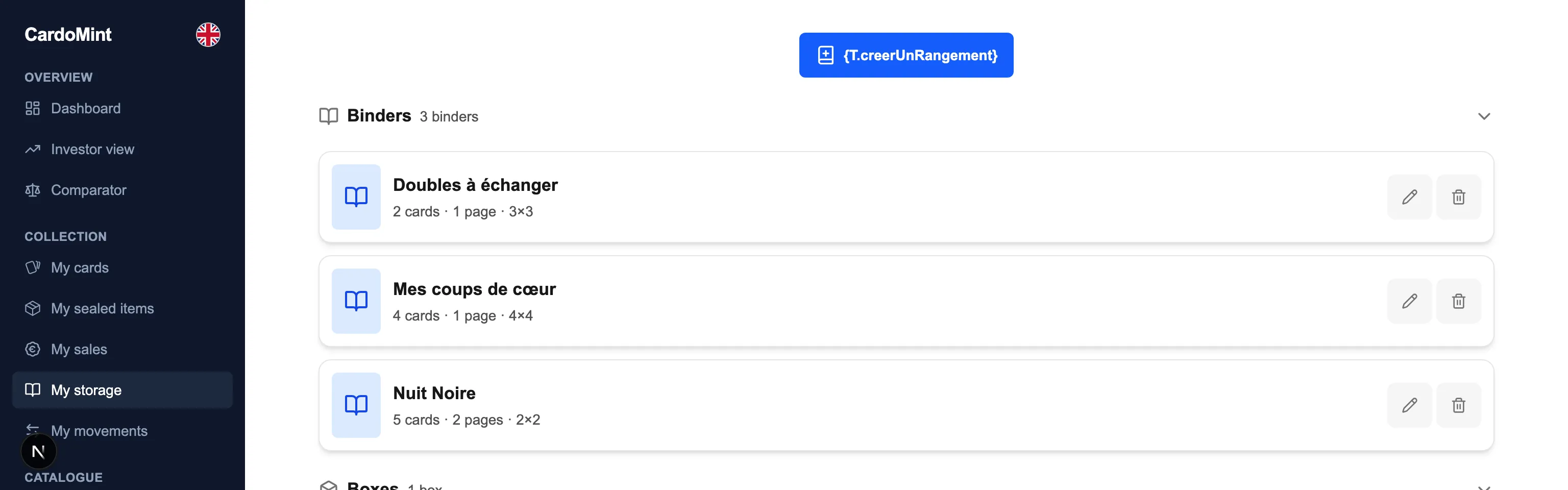
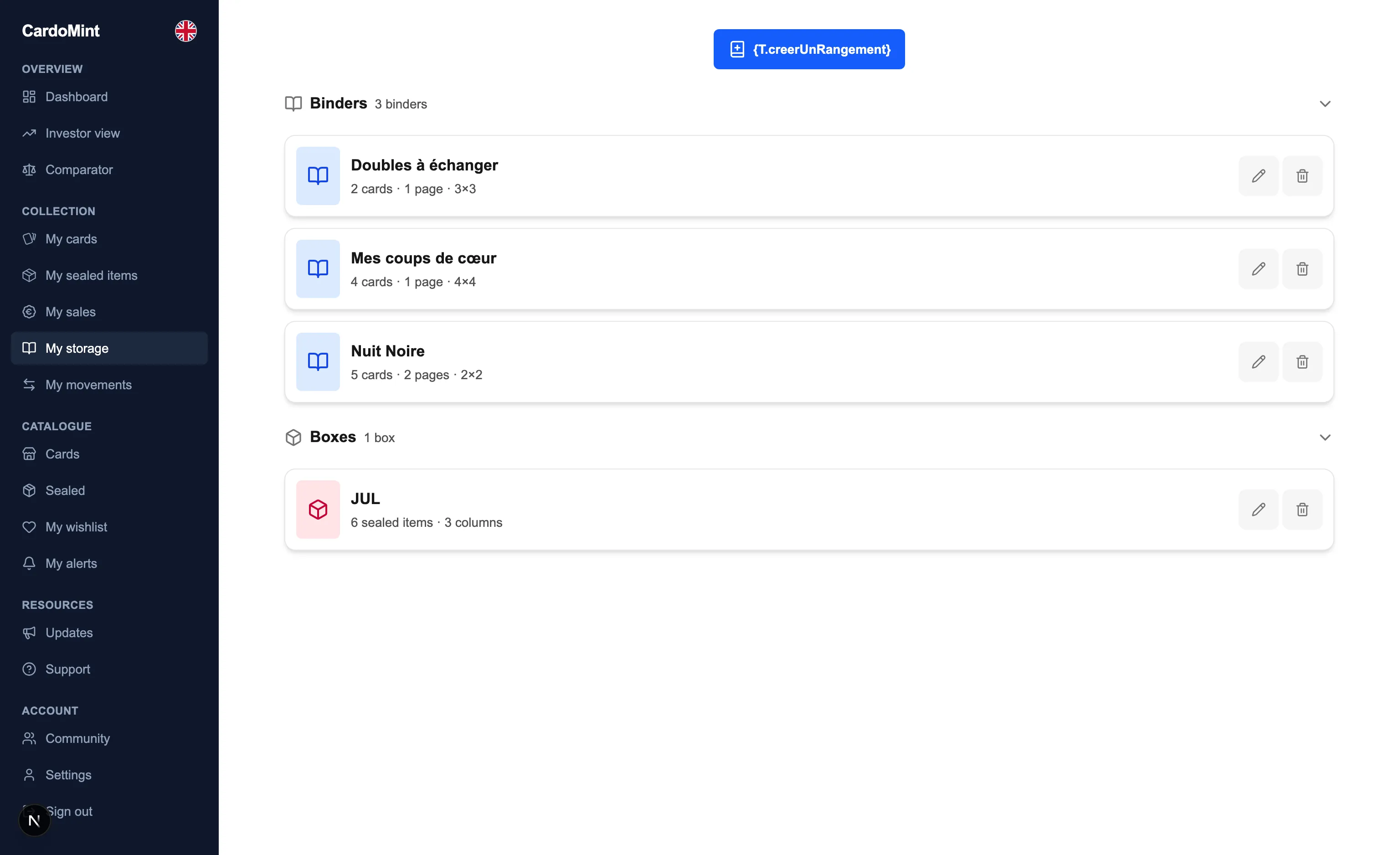
- Binders and boxes: a card sits in a precise pocket, moved with a finger.
The collection
A date, a price, a place, a condition and a quantity — each batch carries its own.
1 / 12
- One batch per purchase
- Three copies bought at three moments are three rows. Each keeps its unit price, its date and where it came from.
- 9 conditions
- Mint through Poor for a card; four conditions of its own for a sealed product — a sealed box is not graded like a card.
- Printings
- Normal, reverse, holo, first edition. A card only offers the printings it actually declares.
- 14 languages
- With the printing's flag on batches, wishes, sales and alerts — and nothing where the copy carries none.
- Grading by scale
- 6 companies, 113 grades. A graded card shows « PSA 10 » and no longer asks for its condition: the slab carries the verdict.
- Tick, or record
- A box per printing declares ownership without creating a purchase at €0 — which would distort the amount invested, the ROI and the allocation.
- Sales
- Selling decrements the batch and creates a sale that copies the product — the history outlives the object.
- Invoices
- The front and the back of one receipt, attached to the batch. Stored outside the repository, with their own keys.
- Binders and boxes
- Pockets filled page by page by dragging with a finger, gaps kept: an empty pocket stays a place.
- Excel export
- A two-sheet workbook — collection and sales — with real dates, currencies and percentages, frozen filterable headers.
- Wishlist
- A heart on every grid. A wish survives buying the product, and selling it again.
- Movements
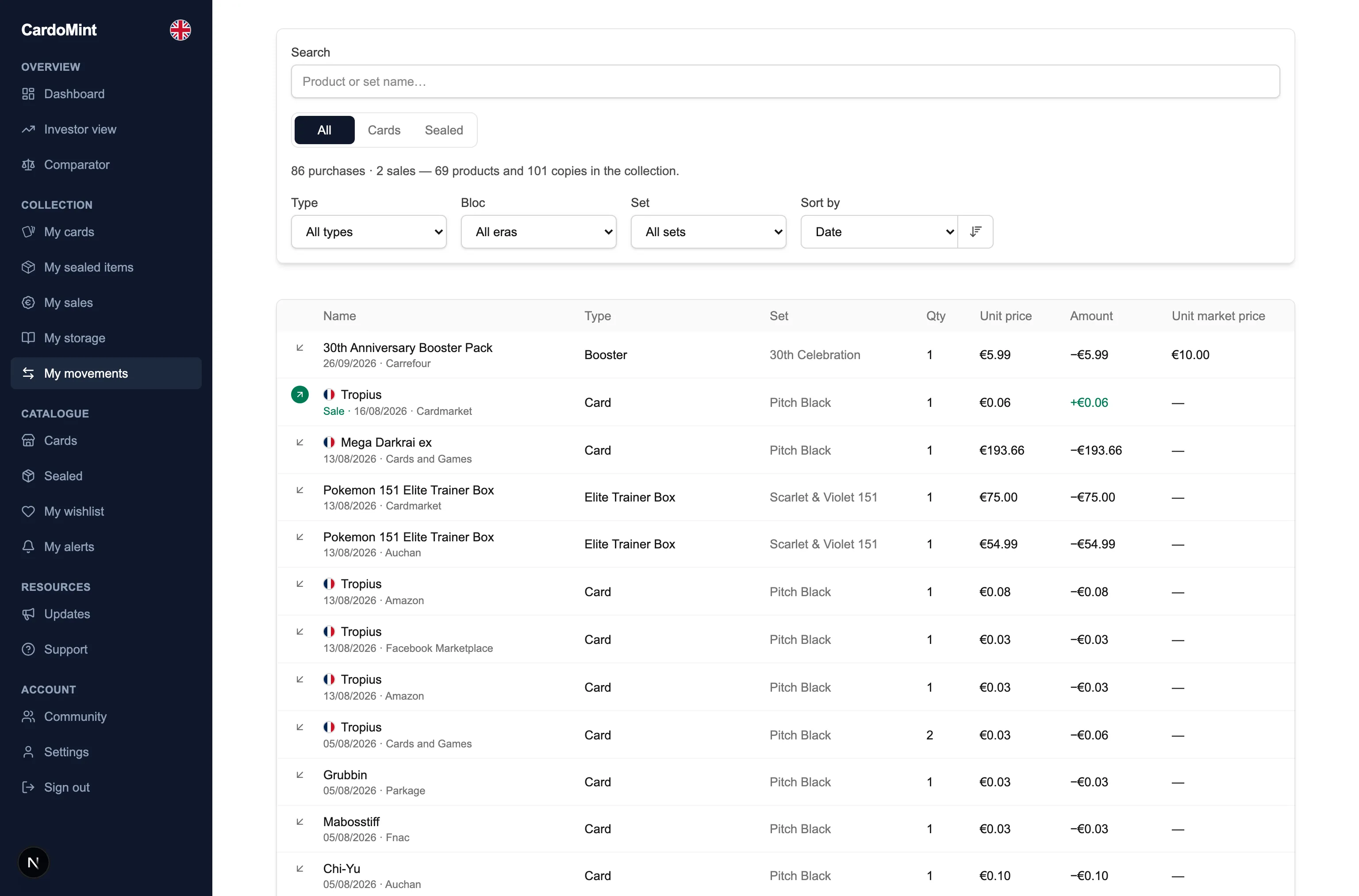
- Every purchase, every sale, every price reading, in one filterable log.
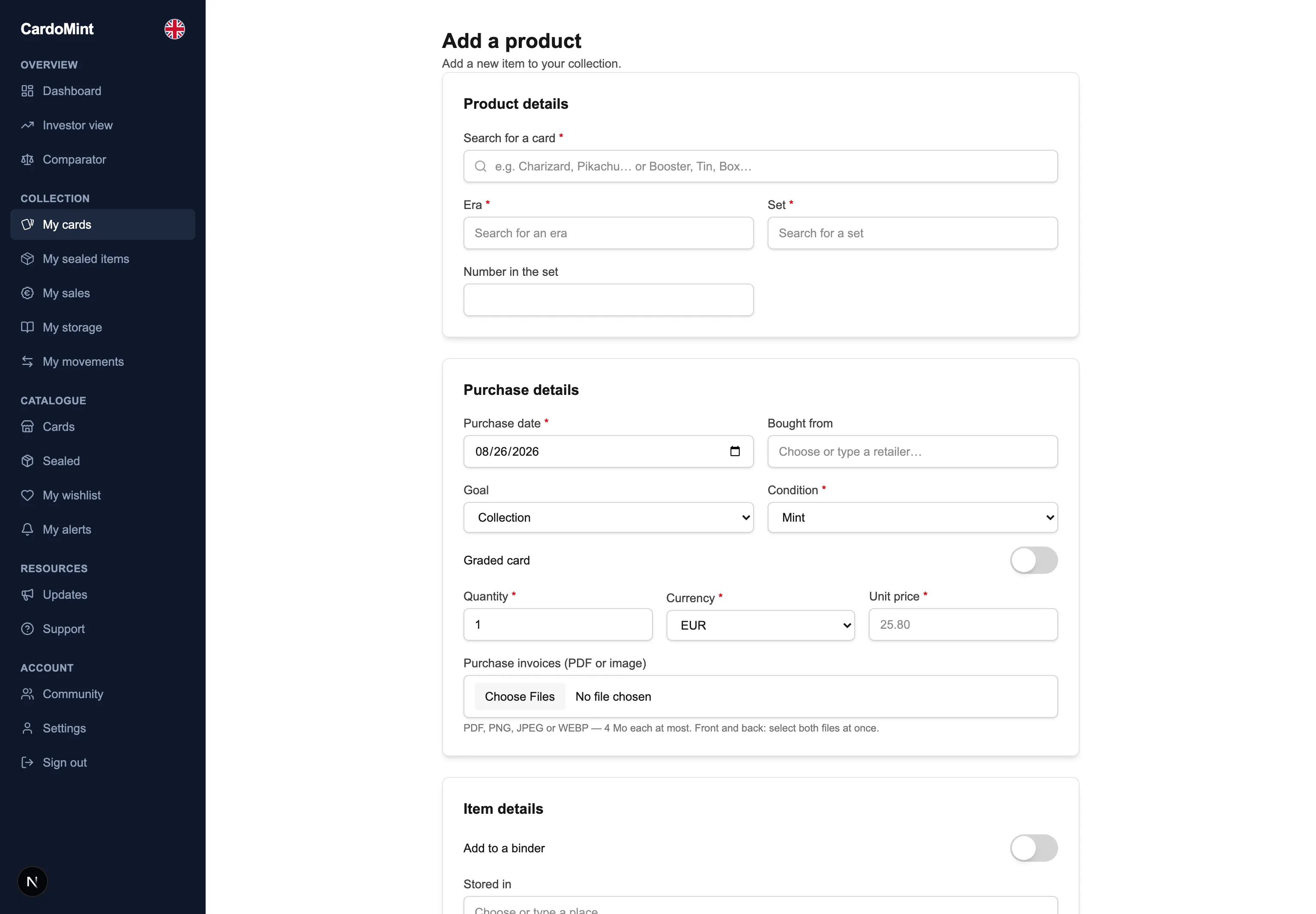
Adding a card: three letters, one click
The catalogue fills the form for you. What you type is what the catalogue cannot know — what the card cost you.
1 / 6
- The search queries the catalogue live
- Name, set, printed number, photo, rarity and recommended price arrive filled in. Those four fields are then read-only: they identify the card, they are not retyped.
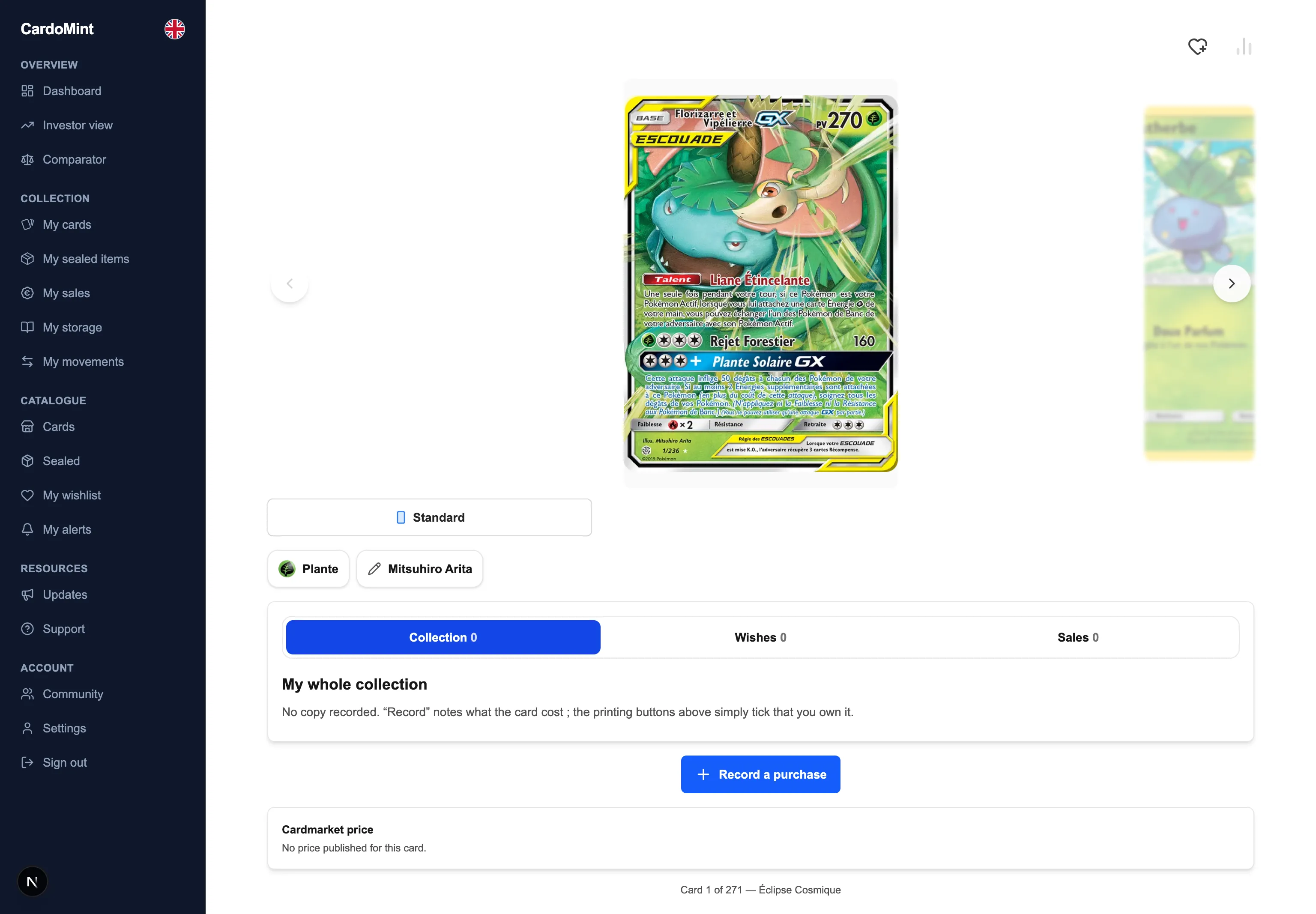
- The card's sheet, before the purchase
- Full-size photo, printed versions, type, illustrator, rarity, Cardmarket price per version, and the history recorded since the first day the card was opened.
- Tick, or record a purchase
- Two distinct gestures, never one for the other: a box says « I have it », a purchase says what it cost. A click that invented €0 would distort the total invested and the performance.
- The purchase date is bounded
- It cannot precede the product's release date — a wrong date distorts the holding period, and therefore the annualised return.
- From any screen
- The catalogue, a card's sheet, the wishlist: every path opens the prefilled form and comes back to where you were once the purchase is recorded.
- The invoice attaches to it
- A photo or a PDF, taken with the phone's camera. The batch then carries a tick that leads to the file.
And card scanningIn development
Point at the card rather than search for it. The place is already reserved at the centre of the app's navigation bar — the button exists, it is inactive, and it says itself that it does nothing yet. What is missing is not the data: all 67,432 cards have their photo, their number and their printing. It is the recognition.
All of it is open from day one
The entire app is available by invitation, free of charge.